
Guests
Chizaram Oluebube UzomaWhere from: University of Ghana, Accra, Ghana Duration: June 2026-September 2026 Project: Characterisatoin of biodiversity of Taro. Taro was, similar to bananas, domesticated more than 10000 years ago on the Solomon Islands (Neu Guinee). Meanwhile it is an important staple food in West Africa. Breeding varieties with resilience against climate-change born stress is relevant, but very little is known about the genes that are crucial. Currently, a collection of old Taro landraces is screened, to attain insight into the genes relevant for starch accumulation under stress. |
||
 |
Harena LoubienWhere from: University of Fianarantsoa, Fianarantsoa, Madagascar Duration: October 2024-August 2026 Project: Analysis of the mode of action of Rhopalocarpus, a traditional medicinal plant from Madagascar. In almost all developing countries, people have to rely on traditional plant-based medicine, because they cannot afford Western-style medication. To arrive at a quality standard, it is important to know identity and modes of action. The plant world of Africa is still only partially elucidated. Madagascar with its high proportion of endemic species that occur only there, is of special interest here. Rhopalocarpus is traditionally used for wound healing, but the active compounds are not known. In the project, this species has been authenticated by genetic barcoding, then the extract was investigated with respect to bio-activities that relate to wound healing. A strong anti-oxidative effect and a strong activity on microtubules was of special interest. Through GC-MS several candidate compounds could be identified that are currently investigated with respect to their biological mode of action. |
|
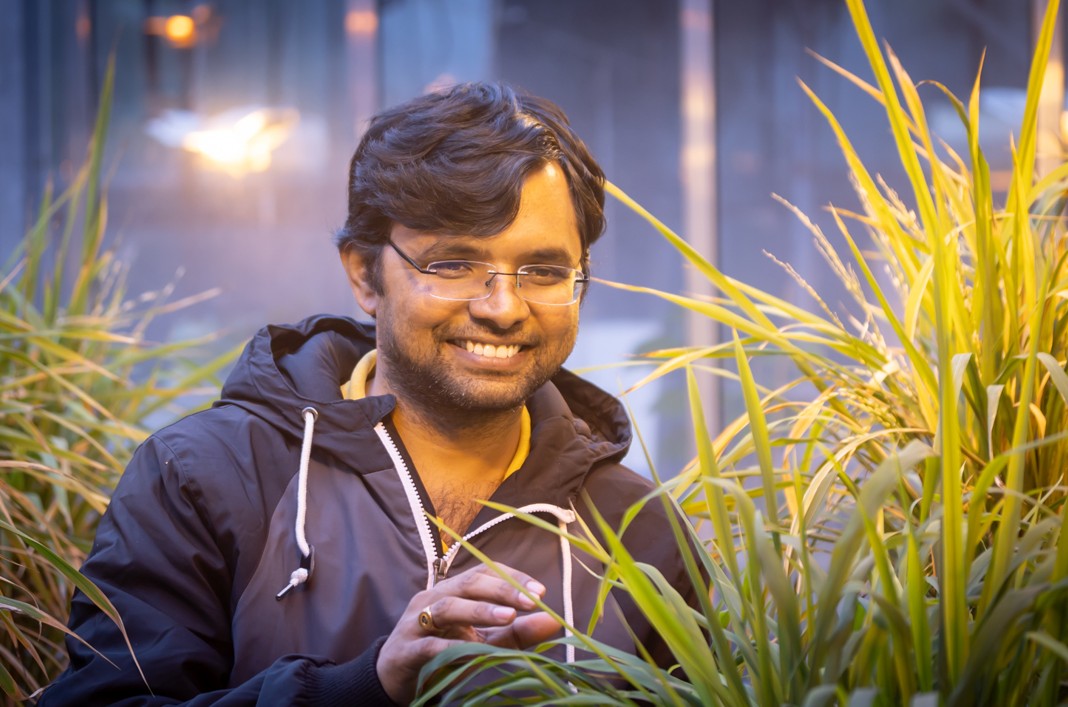 |
Sai Kumar HalavathWhere from: Sam Higginbottom University of Agriculture, Technology, and Sciences (SHUATS), Prayagraj (Allahabad), Uttar Pradesh, Indien. Duration: May 2024-November 2025 Project: The role of jasmonic acid for the drought tolerance of rice. Using a hydroponic system Sai Kumar Halavath compares the response to osmotic stress between wild type and the mutant coleoptile photomorphogenesis 2, where through gamma rays the gene for Allene Oxide Cyclase has been inactivated, resulting in the inability to form the stress hormone jasmonic acid. In parallel, he investigates an ancient Indian landrace called Sathi. In addition to physiological measurements, the activity of several stress and adaptive genes, and the levels of various plant hormones is analysed. The results are part of a PhD at SHUATS. |
|