
Woran forschen wir?
| Applied Biodiversity | Plant Stress | Cellular Biotechnology |
 |
 |
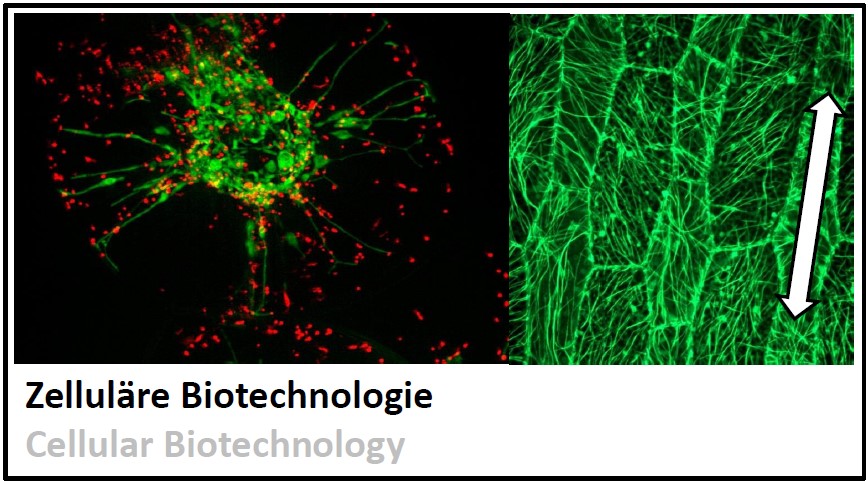 |
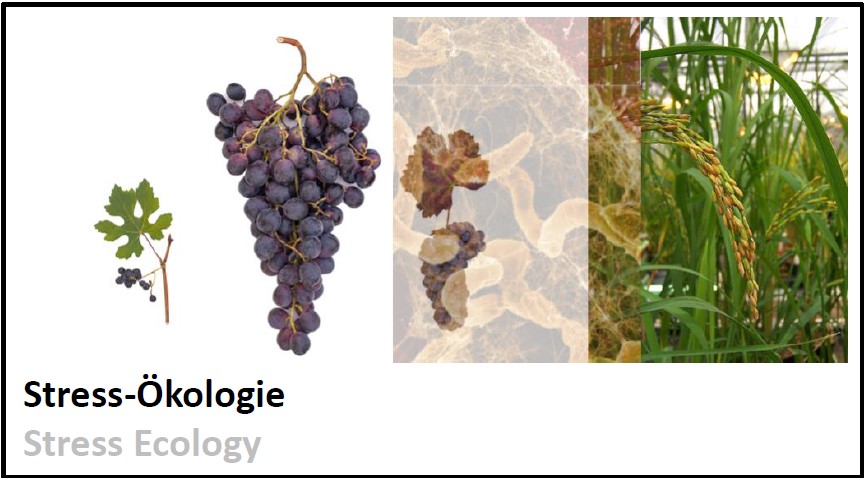
| What is it about? Evolution is based on variable and sustainable solutions for the adversities of life. This diversity is endangered by humans. Our Group Applied Biodiversity tries to understand, protect, and exploit plant biodiversity. In the focus: Crop Wild Relatives. Here, we work on the exciting question, what the biological term "species" actually means. | What is it about? Plants cannot run away, they must adapt. They distinguish different stress types to respond appropriately. How can plants distinguish, how can they activate the appropriate mechanisms of adaptation? We do research for a sustainable agriculture of the future and therefore work with the crop plants Rice, Sorghum, and Grapevine. Our central target is the hormone jasmonic acid. | What is it about? Plants can generate an entire organism from any single cells. We can't do that. How is a crowd of cells organised into a new entity, how do individual cells sense their integrity. These scientific questions lead to applications - can we manipulate cells by "chemical Trojans" without violating their integrity, can we combine different cells in a microfluidic biofermenter into a technical organism to produce medically interesting compounds? |
| What we do: We develop novel ways to detect, authenticate, preserve and exploit biodiversity, for instance as resource for a sustainable agriculture. | What we do: We try to decode the way, how plants perceive stress and activate adaptation. | What we do: Can we understand, how an organism emerges from individual cells? Can we simulate and technically exploit this? |
|
Individual projects
|
Individual projects
more...
|
Individual projects
|
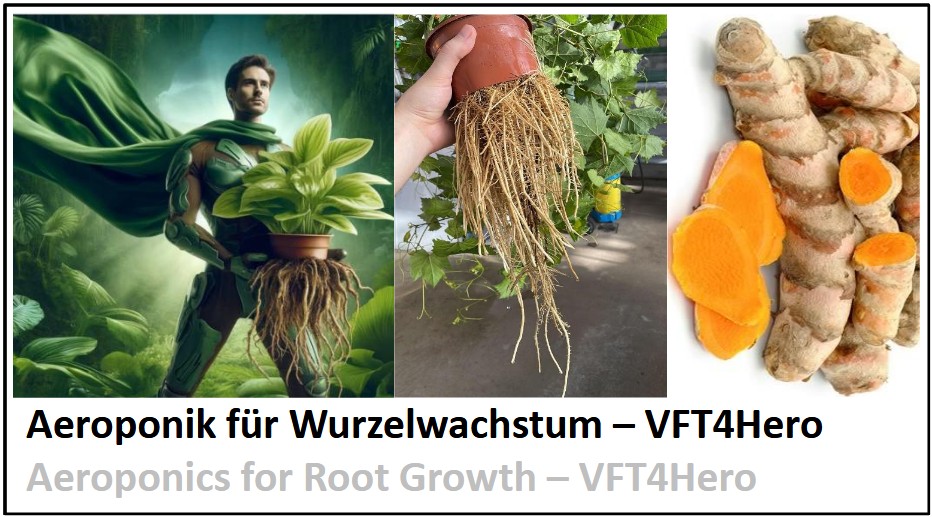 |
New Project in the Field of Vertical FarmingNovember 1, our new cooperation project with the Start-up Vertical Farming and the Max-Rubner-Institute, funded by the Federal Institute for Agriculture, will be launched. Running time is three years. A precursor project, funded by the State of Baden-Württemberg tested, in the Botanic Garden of the KIT, a prototype for a Vertical Farm device, where the accumulation of value giving compounds was stimulated by repeated gravity stimulation. In theis context, we discovered that aeroponics (spraying the roots with a nutritious mist) stimulates root growth to an extent never seen before. The new project will now valorise this discovery. Target are cash rhizome crops such as Ginger, Turmeric, or Wasabi. To protect the precious products from infection by pathogens, a new technology will be tested, where the roots are inoculated by root bacteria that had been identified by us previously. These microbes can stimulate plant immunity. This will allow to avoid chemical plant protection, but also circumvent the need for the extreme quarantine standards commonly used in Vertical Farming. This will lower costs considerable and extend the applicability of this new farming method far beyond current use. |
|
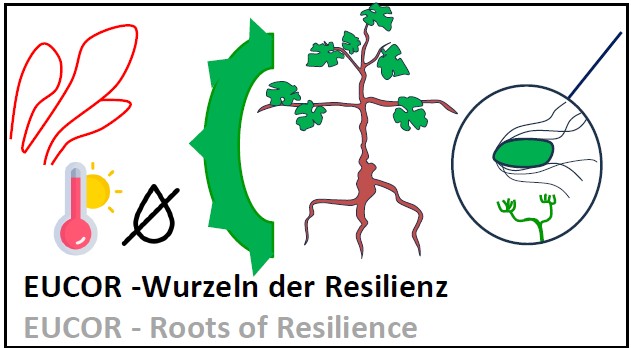 |
EUCOR Project Roots of ResilienceEUCOR, the trinational assocation of Upper-Rhine universities (Karlsruhe, Strasbourg, Freiburg, Colmar-Mulhouse, Basel) launched a call for so-called Seed Money projects. Here, partner KIT-JKIP (Islam Khattab, Peter Nick) together with the University of Basel (Pascale Flury) and the Université Haute-Alsace (Julie Chong) was successful with the project Roots of Resilience. The project tries to render grapevine more resilient against climate-change born novel fungal diseases ("Esca & Co") through improved microbial communities in the rhizosphere. The project is based on results of Kliwiresse, but also previous Upper Rhine Interreg projects, especially Vitifutur and DialogProTec. However, the central reason for the success of the proposal was the cooperation cultivated over four Interreg Upper Rhine networks. The Seed Project in turn will feed into the planned sequel project Robin Root. Planned start is February 2025, running time is two years. more... |
|
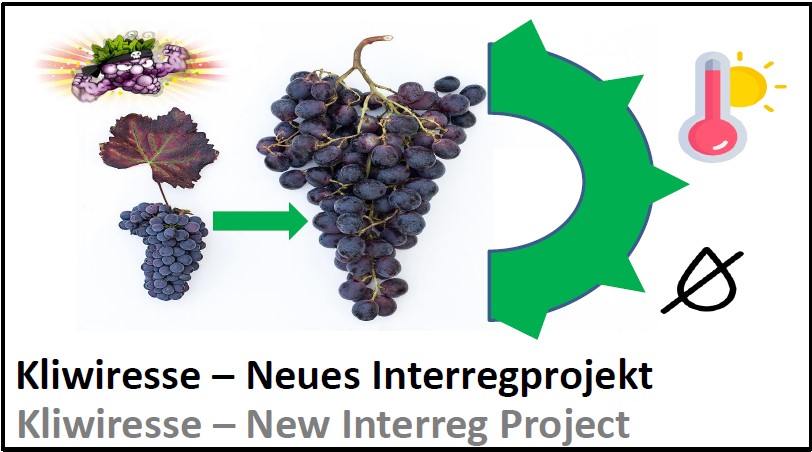 |
KliwiresseOctober 1, 2022 our new Interreg-Upper Rhine project Kliwiresse has been launched. A research net, coordinated by the Botanical Institute with partners from three countries in the region works to adapt viticulture to climate change. In many places, new vineyards can be laid down only with artificial irrigation, leading to conflicts with the supply of drinking water. We ask the ancestor of our grapevine, the almost extinct European Wild Grapevine, for help. Here, we search for genes that help to cope with heat, UV and drought stress, to cross them into cultivated grapevine. We will employ cutting edge technologies such as automised microscopy, non-targeted metabolomics, or double haploidisation. Goal are ´KliWi-Grapes (for Klima-Widerstandsfähig, climate resilient) that are supposed to continue the success story of the PiWi-Grapes (for Pilz-Widerstandsfähig, fungal resistant) that had also been developed in our region. At the same time, for the rootstock and fruit grapes relevant in our region, we will develop knowledge based predictors of their climate resilience, to help winegrowers to adapt to climate change by adjusting their selections. The project runs for three years and will cost 2.8 million €, whereby 1.6 million € will be covered by Interreg Upper Rhine. more about Kliwiresse
|
|
 |
The Campus as Space for Life
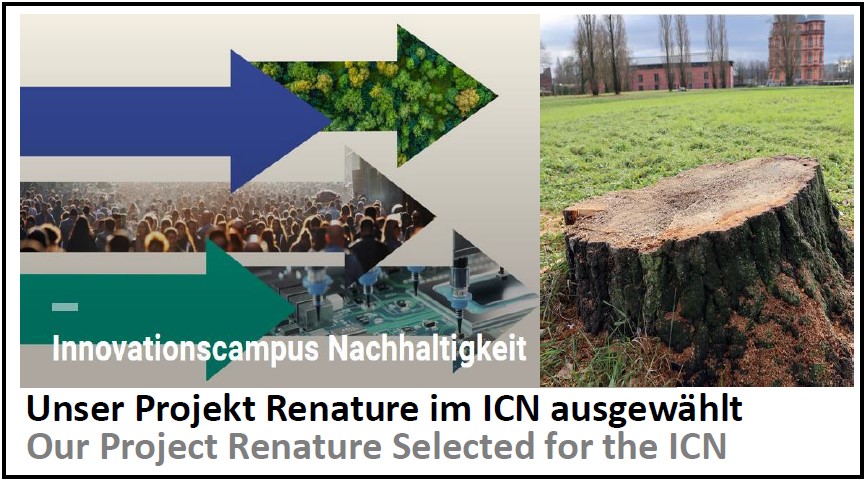
Climate change is not only affecting Nature, it is also making life in human ecosystems more and more difficult. Heat waves will hit our cities more often than in the past and they will be more massive. Trees can help us to mitigate the challenge. By their transpiration, they can cool air temperature by more than 5 degrees, and their shade gives shelter to humans and animals alike. However, more and more urban trees suffer from Dieback and have to be cut down, also in Karlsruhe, also at our Campus. What can we do against it? How can we find out, to what degree a tree is stressed and what it needs to recover again? In frame of the project Renature, we will, together with partners at the Campus Alpin, ITAS, and the University Freiburg, use our longstanding expertise in plant stress to assess the stress status of trees in the Campus and develop a science based strategy for stress management. This project was among the three that were selected for the kick-off of the new Innovation Campus Sustainability of KIT and the University of Freiburg. During the last four years, we have been working in the grassroot network Klima - Inititative - Technologie (K-I-T) to for a sustainable improvement of the Campus as Ecosystem. Renature will help uns in using science for transformation. Not only for the sake of us humans that want to live and work here, but also for the sake of other life forms, for which we bear responsibility. |
|