
 |
 |
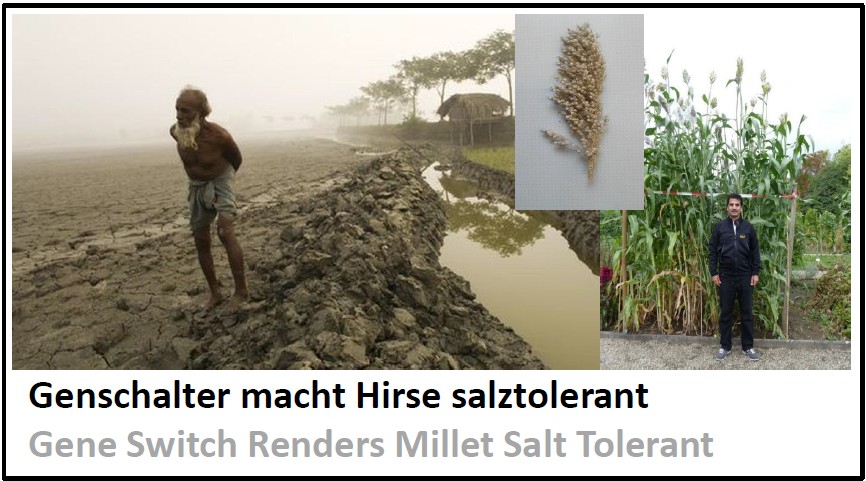
NEWSalt tolerant Sorghum Millet. Climate change causes rising sea levels, rendering fertile land salty. Can we find crop plants able to grow on such soils? Some millets are able to do that. We could show that the gene switch for the sugar transporter SWEET13 is crucial. We found a very active version of this switch in the ancient Syrian landrace Razinieh. This allows breeding of new varieties that are more salt tolerant. Publication 216. Abuslima E, Kanbar A, Ismail A, Raorane ML, Eiche E, El-Sharkawy I, Junker BH, Riemann M, Nick P (2025) Salt stress-induced remodeling of sugar transport: a role for promoter alleles of SWEET13. Nature Sci Rep 15, 7580 - pdf PRESS RELEASE OF THE KIT . Interview in the Campus-Radio
|
CLASSICSFundamental research is usually funded publicly, meaning, by tax money. The results are, following a lengthy review process, in international journals. This makes sure that the quality of the results has been checked. Some of these publications induce a strong echo. Others are so new that it can take years, until they get recognition. A lot of patience is needed, thereore, until one can harvest the fruits of the own work. Here, you find the "classics" from our lab that have been widely read and quoted (often after several years). |
Publicaciones 2026 - Papeles Originales
230. Kanbar A, Lemma HB, Saake B, Stolzenburg K, Nick P (2026) Potential of Sorghum Stalk as Climate Resilient Resource for Paper Production. Bioresources 21, 7247-7263 - pdf
229. Kanbar A, Nick P, Jabbour Y (2026) Integrating multivariate analysis and DNA barcoding for Amaranth germplasm characterization and elite genotype selection. Plants 15, 1493 - pdf
228. Rahpeyma T, Varo GV, Mühlberg F, Nick P (2026) Fingers for Signaling. A Possible Role Of Stromules In Intracellular Communication. Plant Physiol, doi 10.1093/plphys/kiag373 - pdf
227. Wang R, Nick P (2026) Priming of defence in grapevine cells depends on actin filaments. Protoplasma doi: 10.1007/s00709-026-02206-w - pdf
226. Khattab IM, Magold T, Lenk F, Sturm G, Flubacher N, Kaster AK, Nick P (2026) Health or disease – a question of rhizomicrobial ecology? The case of grapevine trunk disease. Plant Soil 522, 697-714 - pdf
225. Ma J, Morel JB, Riemann M, Jacob S, Nick P (2026) Pyriculol-mediated defence potentiation in rice: a non-pathogenic secondary metabolite enhances host immunity against Magnaporthe oryzae. J Exp Bot 77 2594-2610 - pdf
224. Liu Q, Seidler L, Nick P (2026) Tobacco two-pore calcium channel 1a is localised at the tonoplast, but acts on events at the cell membrane. Protoplasma 263, 423-438 - pdf
223. Wang L, Zafar MM, Wu CY, Xiong ZhQ, Sun JY, Sun HP, Cong HQ, Seleiman MF, Qiao F, Nick P (2026) Producing the antitumor compound deoxyharringtonine by suspension-cultured cells of Cephalotaxus hainanensis. Turk J Agricult For 50, 116-126 - pdf
Publicaciones 2025 - Revistas y capítulos de libros
[67] Daldoul S, Khattab I, Bahlouli I, Nick P, Mliki A, Gargouri M (2025) Help from the past to cope with the future: Vitis sylvestris as resource for climate resilience. Plants, People, Planet doi 10.1002/ppp3.70034 - pdf
[66] Li Z, Wu R, Guo F, Wang YJ, Nick P, Wang XP et al. (2025) Advances in the molecular mechanism of grapevine resistance to fungal diseases. Mol Horticulture 5, 1 - pdf
[65] Heger PW, Meinert I, Nick P, Riedl P, Heinrich M, Straub M (2025) Sustainable Cultivation of Phytopharmaceuticals in Baden-Wuerttemberg, Germany: A SWOT Analysis and Future Directions. Pharmac Biol 63, 82-88 - pdf