
Plant Cell Biology - English version
WHAT? Lecture and Practical. WHO? Prof. Dr. Peter Nick, Dr. Jathish Ponnu WHEN? see plan . WHERE? Biotower, Bld. 30.43, 5. floor. FOR WHOM? Master Biology, Chemical Biology, Bachelor Biology, Applied Biology, Chemical Biology.
- Safety: once a year all lab members needs to go through the safety instruction. This is found on Ilias (Pfad: Fakultät für Chemie und Biowissenschaften - laufendes Semester - BIO_Sicherheitsbelehrung_Nick_Lab). Print your result and bring it as reference till the start of the lectures.
- Handover: at the end you need to hadn over lab space, samples, data to your mentor and the keys for your cupboard to Herr Krüger. Details are here.
- Student cupboards: can be obtained in the secretary (Frau Williams), need to be returned at the end of the module.
-
Introduction into methods and concepts of modern plant cell biology.
-
Competence in interpretation of current methodology
-
Deep understanding of these methods
-
Practicing independent scientific thinking, critical approach with sources.
-
Cellular aspects of plant development
Ablauf des Moduls (Organisation of the Module)
The module is offered in two versions in the block after the winter term.
- For Master students as Research Module for the subjects Botany, Developmental Biology, and Cell Biology, also as part of the Vertiefermodul Chemical Biology. Start Mo 23.02.2026, 11:00 (SR 506-507, Bld. 30.43).
- For Bachelor students as version of BA 07/ANG 07 Biologische Forschung, also for Chemical Biology. Start We, 04.03.2026, 10:30 (SR 506-507, Bld. 30.43).
The lecture Plant Cell Biology - Methods and Concepts is the same in both version (Dates and topics). The Group Exercises are also the same, but some other parts are partially different based on the different levels of experience. (Details can be found over the links given above). Final presentations and written exam are the same.
Date final presentations Tue 31.03.2026, 10:00-12:00 (around 20-25 min per team) - afterwards handover lab space, data, and samples
Date exam We 01.04.2026, 10:00-12:00 (SR 506-507)
Projects Spring 2026 |
|
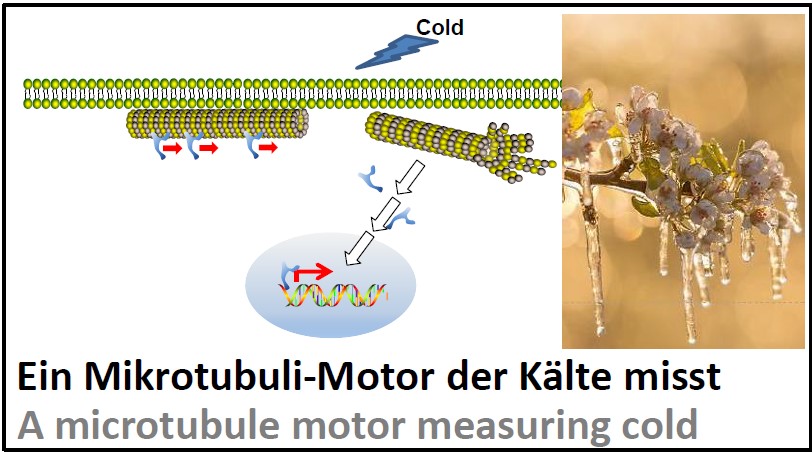 |
Who? Bachelor, Master Where? Nick-Lab, Biotower 5. floor. Subgroup Cellular Biotechnology. more... Supervision? M. Sci. Jiang Wu. e-mail... Background? A microtubule motor that acts as stress sensor. more... Start? Kick-off Master Mo 23.02.2026, 11:00, Bachelor We 04.03.2026, 11:45 (after first lecture), seminar room 506-507, biotower How many people? 2 Master+2 Bachelor Continuation options: Bachelor thesis, P-module or Master thesis |
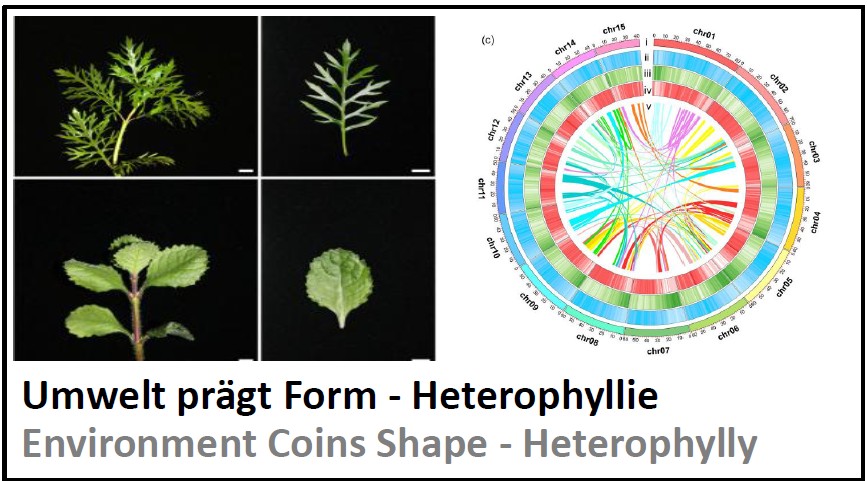 |
Who? Bachelor, Master Where? Nick-Lab, Biotower 5. floor. Subgroup Cellular Biotechnology. more... Supervision? Dr. Jathish Ponnu e-mail..., Xiao Chen. Background? The amphibic plant Hygrophila can generate different leaves, depending, whether it is submerged or aerial. The team around Dr. Ponnu develops this phenomenon into a model to study environment induced changes of plant morphogenesis. The current project dals with the coupling of the plant hormone abscisic acid. Xiao Chen has developed a working model, centering around the protein kinase SnRK2. You can learn from this case, how models can help to structure research projects. This so-called hypothesis driven research is considered as gold standard for fundamental science. more... Start? Kick-off Master Mo 23.02.2026, 11:00, Bachelor We 04.03.2026, 11:45 (after first lecture), seminar room 506-507, biotower How many people? 2 Master+2 Bachelor Continuation options: Bachelor thesis, P-module or Master thesis |
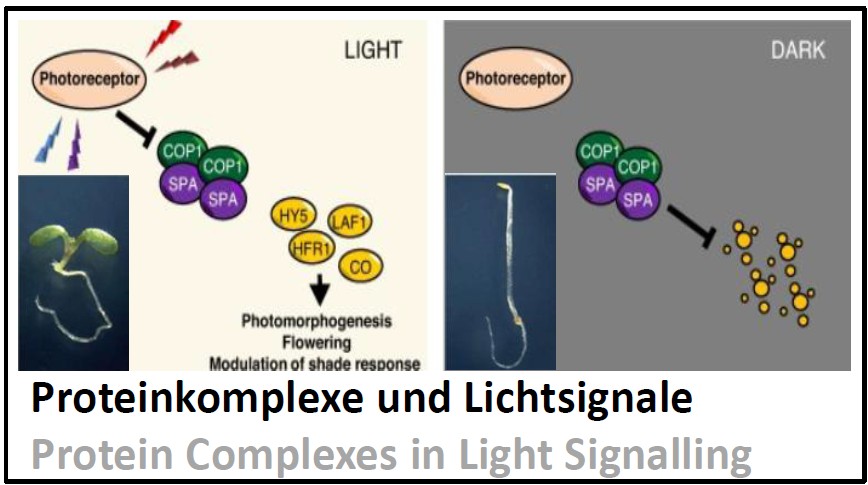 |
Who? Bachelor, Master Where? Nick-Lab, Biotower 5. floor. Subgroup Cellular Biotechnology. more... Supervision? Dr. Jathish Ponnu e-mail..., Qianwei Liu. Hintergrund zum Projekt? Immerse yourself in the fascinating world of plant biology with a bachelor’s project centred on a large protein complex that plays vital roles in processes ranging from light signalling to flowering by acting as a ubiquitin ligase. We believe we’ve identified a novel interaction partner for this complex, and your task will be to confirm this interaction, which appears essential for the plant's survival.You will utilize techniques such as Yeast Two-Hybrid (Y2H), split-luciferase assay, and confocal microscopy to validate the interaction both in planta and ex planta. Additionally, you will check the localization of this novel protein within plant cells and analyze its transcript levels using RT-qPCR to gain insights into the molecular dynamics involved. Specific projects in 2026: 1. Role of the CUL4–C3D complex. Students will analyze phenotypes of different transgenic lines and mutants under blue-light conditions and perform various molecular analyses related to how CRY impact on the C3D complex. 2. Search for a new potential substrate of DDA1. In a previous yeast two-hybrid screen, LRL2 was identified as a possible DDA1 interactor. LRL genes are known to regulate root hair development in Arabidopsis, and loss of LRL function results in reduced root hair elongation and a short, spiky root hair phenotype. However, it is currently unclear whether LRL-mediated regulation of root hair development is influenced by blue light, and how this process might be linked to DDA1. In this project, students will will first confirm the interaction between DDA1 and LRL2 using different approaches (Y2H, BiFC, Split-LUC, Co-IP). Start? Kick-off Master Mo 23.02.2026, 11:00, Bachelor We 04.03.2026, 11:45 (after first lecture), seminar room 506-507, biotower How many people? 2 Master+2 Bachelor Continuation options: Bachelor thesis, P-module or Master thesis |
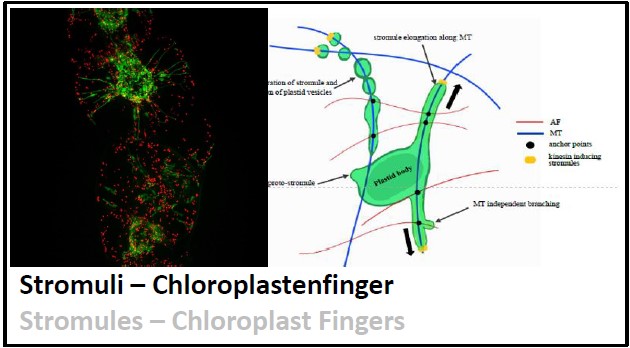 |
Who? Bachelor, Master Where? Nick-Lab, Biotower 5. floor. Subgroup Cellular Biotechnology. more... Supervision? M. Sci. Javier García Varo. e-mail...
Hintergrund zum Projekt? Background on stromules. more... Start? Kick-off Master Mo 23.02.2026, 11:00, Bachelor We 04.03.2026, 11:45 (after first lecture), seminar room 506-507, biotower How many people? 2 Master+2 Bachelor Continuation options: Bachelor thesis, P-module or Master thesis |